
About Dr. Robert Hughes
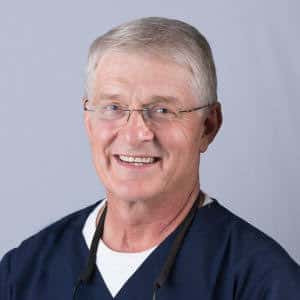
Dr. Robert Offer in Penticton has extensive involvement in teaching including rheumatology fellows, residents and medical students. He is involved in many continuing-education events for physicians. Penticton is the major rheumatology resource for the interior with a well-staffed Mary Pack Treatment Centre at Penticton Regional Hospital and a drug monitoring clinic covering more than 500 active rheumatoid arthritis patients. Dr. Offer does outreach traveling consultation clinics and now telemedicine to Creston, as well as research and clinical trials.
OVERVIEW OF THE UBC DIVISION OF RHEUMATOLOGY
The UBC Division of Rheumatology currently consists of 26 active faculty members, as well as three associate members, two adjunct members, and four emeritus members. Rheumatology consultation services are offered at Vancouver Hospital & Health Sciences Centre, St. Paul’s Hospital, and G.F. Strong Rehabilitation Centre. Ambulatory care services are available at the Mary Pack Arthritis Centre, the Gordon and Leslie Diamond Centre, St. Paul’s Hospital, and in private practices throughout Metro Vancouver, Penticton and Victoria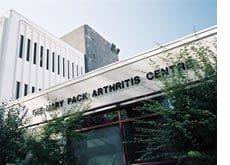 . The Arthritis Society (BC & Yukon Division) provides excellent patient education and resources available through the Learning Centre based at the Mary Pack Arthritis Centre.
Many divisional faculty are members of the Arthritis Research Centre of Canada, a multidisciplinary clinical research and clinical trials facility affiliated with both the University of British Columbia and the Vancouver Coastal Health Research Institute. The Arthritis Research Centre focuses on “Practical Research for Everyday Living” for people with arthritis.
The two-year Postgraduate Training Program in Rheumatology continues to be the second-largest clinical rheumatology training centre in Canada. The program typically receives funding from the Ministry of Health for one trainee every year. Also, one or two internationally-funded trainees are considered. Active in-patient, ambulatory care and research training is done at Vancouver Hospital & Health Sciences Centre, St. Paul’s Hospital, G.F. Strong Rehabilitation Centre, the Arthritis Research Centre, and in private practices throughout the Lower Mainland and elsewhere in the province.
The Division of Rheumatology annually offers the week-long “Basic Skills Course for Rheumatology Fellows” in July, which is attended by rheumatology trainees across the country. More information can be found on this site.